Thursday, 31 October 2013

Gillian Dyer-Advertising as Communication (1988)

According to Gillian Dyer (Advertising as Communication, 1988) advertisers use, among other techniques, lines of appeal to create brand identities and attract their target audience.

Audi:
Audi is a luxury car manufacturer which sells high quality, premium priced, luxury cars. Audi fit into several of Dyer’s lines of appeal. The first category is ‘rich, luxurious lifestyles’. Those who earn a good income aspire to have a luxury brand car to represent their wealth and success. This could lead to ‘successful careers’ as you would expect those who receive a good income to work towards buying an Audi or already have one. Lastly, Audi could be placed into ‘dreams and fantasy’ as the brand can customize their cars for each customer making the desired car achievable.  

The Audi brand is about a luxurious and aspirational lifestyle.

Audi in one word: Prestige

Johnson's:
Johnson and Johnson is a skincare brand which specialises in baby skincare and produce mildly formulated skincare products for babies. This brand would fit into ‘happy families’ as the Johnson advertisements always promote happy, loving and caring mothers and babies. Another category this fits into is ‘childhood’. The maternal affection shown presents nurture and protection of the parent and baby. The brand values of Johnsons are to protect babies skin as the slogan states, ‘no more tears’ and also to sell non-harmful cleansing products. The brand is also promoted for use by mothers by being good for babies and good for grown-ups.

Johnsons specialise in baby skincare and sell non-harmful cleansing products.

Johnsons in one word: Gentle

Guerlain:
Guerlain is a skincare brand which also sells fragrance and make-up. It is a luxurious brand reflected by the high prices, premium quality and elegant packaging. The first category it fits into is ‘beautiful women and men’. The brand sells both cosmetics for men and women to enhance their beauty, making them more admirable. Another category is ‘dreams and fantasy’. Women admire what the women presented in the brand look like and men admire them also in a sense that they think they are beautiful and would want to be with someone like that. The brand cares for both men and women’s skincare.

Guerlain create a look of elegance for men and women.

Guerlain in one word: Elegance

Qatar airways:
Qatar airways are a global airline company that deliver flights around the world every day. The lines of appeal the brand fit into are: ‘rich, luxurious lifestyles’, ‘happy families ‘, ‘elite people or experts’,  ‘beautiful women’ and ‘glamorous places’. As Qatar airways are a luxury airline provided with comfortable seating and tasty food, it is usually a service the middle and upper class take advantage of, elite people fly in first class. Families are mostly shown advertising the airline looking happy when travelling to glamorous, exotic destinations. The beautiful women hostesses are also shown with a kind and polite attitude towards the guests boarding the plane.

Qatar airways are a friendly, luxury airline service.

Qatar in one word: Luxury

Apple:
The brand Apple specialises in creating the latest, innovative technology; phones, applications, laptops, tablets etc. Dyers lines of appeal that Apple fits into are ‘dreams and fantasy’, as Apple products are quite expensive they may take people time to save money to buy them and work their way towards them. Apple could also fit into ‘rich, luxurious lifestyles’. Those of a higher class are able to afford Apple products such as MacBook’s which are quite expensive. Another category Apple fits into is ‘elite people or experts’. Elite people tend to have high quality technology such as Apple phones or laptops.  

Apple is a well-known brand for high quality technology products.

Apple in one word: Innovative

Sunday, 20 October 2013

Film Language

Cinematography:

Psycho - 1960:

Camera framing and movement-
The scene begins with a medium shot (MS) of the man looking as though he is concentrating and about to do something suspicious. The screen then cuts to a close up (CU) where we see him remove the picture on the wall and discover a hole which makes the audience even more suspicious of him. Immediately, he looks through it and an eyeline match and point of view (POV) shot takes place and the audience and the man both see the woman undressing, which is a long shot (LS). This gives the audience an idea that he is planning on doing something to the woman. The camera again cuts to an extreme close up of the man's eye as he peers at the woman some more. We again notice another POV shot and the woman now has her silk robe on (LS). She then walks off the camera and then a CU of the man reveals him cover up the hole on the wall with the picture, then the camera cuts to show him turn away still looking quite thoughtful. He returns to the same standing point where he was at the beginning of the scene.


Fast and Furious - 2001:

Camera framing and movement:
The scene begins with an establishing shot of all four cars lined up. The screen then cuts to a CU of all four exhaust pipes with fire coming out them. A LS then shows the crowd and the race begins. The camera shows all four gear sticks in drive with a CU. A CU shot reveals the start up of the engine all the way to the moving wheels of the car. The camera then uses a mixture of tracking and dolly shots to follow the action of the cars using LS's MS's and CU's. A high angle shot of the camera tilting down uses a crane shot to focus on the cars to show the audience who is winning the race. Constant CU's of the characters faces and car parts are shown to emphasise the concentration and importance of the race. It also reveals the characters next move. For example when the CU of the laptop is shown inside the car, we instantly know something is going to happen as an eyeline match of the character looking at the laptop takes place. We then witness the drivers car speed up and again see a continuity shot of the engine speeding up. The thrilling car chase reveals many MS's of the cars lined up next to each other to show who is in the lead.

What's the difference?
The difference between these two movies is firstly the time period they were made in (1960 and 2001) and the fact that Psycho is filmed in black and white and the other is in colour. The first clip does not show many camera movements but instead consists of many angles and shots and camera cuts. However, Fast and Furious has almost every shot in movement whether it be tracking, dolly or a crane shot. This keeps the action alive for the audience and is extremely thrilling as we don't only witness the car race but see it from the characters point of view also. Whereas Psycho has more of a suspicious and mystery feel to it. Both clips have an impact and effect on the audience but in different ways. Over the years cinematography has improved drastically as more camera shots and movements are easier to take with the development of technology.

A haunted house:

Editing:


‘The Haunted House’ scene begins with a straight cut revealing the possessed woman looking crocked on the floor as she is in an uncomfortable position with the four men looking at her with quite worried facial expressions. This immediately catches the audience’s attention as we wonder what is going on in the scene. We eyeline match back onto the possessed woman on the floor, then to the men again and back to the woman who gets up and starts moving her head side to side in the camera. A wipe soon then takes place of the woman still looking quite possessed  and the man next to her where he looks to the camera confused and scared and is pointing to her. Another straight cut takes place to show another man screaming and jumping in fear waving his arms around and pointing to her and the four men are all shown again lined up. We then straight cut back onto the woman where she drastically starts waving her hands around and a dissolve takes place where she quite unclearly for the audience moves around on the screen and leaves us feeling uncomfortable.

We as the audience cannot see what is going on clearly and are scared and thrilled at this point. A straight cut reveals the four men waving their hands and yelling at her. The camera then holds still and we see smoke coming out of the woman as she covers her head with her arms and kneels on the floor. The camera again straight cuts to the four men having a conversation all with different facial expressions. However two men are looking scared and two not looking as though they are very bothered. This creates comedy as we can tell it is not taken seriously, otherwise all the observers would have been intrigued and would have quite serious and worried facial expressions. A jump cut then reveals an unexpected edit where we are forced to witness the woman jump onto the wall from the floor quite suddenly and we immediately straight cut back onto the men looking quite frightened and shocked as they all jump back and extend their arms and hands in front of them, looking as though they are trying to all protect themselves.

A straight cut then close up’s onto the woman’s face where she is still attached to the side of the wall. After follows a wipe to show the same man again who we previously witnessed in the wipe cut taken before. The man looks confused as he looks side to side to the woman and to the camera continuously. This could make it clear to the audience that he is the only person standing next to her and we should be worried for him the most. Or, a counter argument could suggest that he is the bravest of all the men and possibly the most important as he is shown a number of times rather than the rest of the guys. Another wipe takes place and the woman jumps into the camera fiercely. The screen then fades out quickly into a plain black screen, therefore we assume something terrible happened to the four men and the scene is over. However, we are surprised when the camera turns back on and straight cuts to a close up and low high angle shot of one of the men who we didn’t pay much attention to during the scene, looking quite scared and alone into the camera. This could tell the audience that while we were so busy paying attention to the other guys, this man was the actual victim, which surprises us.

Sunday, 13 October 2013

ITV Presentation


https://docs.google.com/file/d/0B7l73KfxT4RlWlRZQU1WQjVVX1k/edit?usp=drive_web

WWW:
  • Excellent Prezi Presentation - well designed, clear slides
  • Good true or false starter activity
  • Clear presentation style
  • Some very well researched information
  • Covered key points
  • Well chosen video clip
  • Good timing

EBI:
  • Include questions with starter activity answers
  • Don't finish presentation with a video clip - comment on it
In my  perspective, I believe the lesson was overall quite knowledgeable and informative for my peers and feel that everyone learnt something knew about ITV. This was clear through the 'true or false' starter activity, as most people were surprised with some answers when they were revealed. I liked the way the Prezi Presentation stood out from the rest of the classes as they were all power points and feel this made it more unique and memorable for the class. If I was to do my presentation again I would definitely make sure I structured the answers for the started activity better and give the class a few more interesting facts to remember ITV by.

Wednesday, 2 October 2013

Stereotypes


The images on the left, dominant representation present how people stereotypically view the UK. The UK is usually represented as upper/middle class. Whereas the pictures on the right, alternative representations show what majority of the UK actually is which is working class. The use of purple connotes royalty and class, whereas white gives quite a deprived and empty feeling.

Monday, 30 September 2013

Parallel & Contrapuntal sound - Exorcist theme tune


WWW- 
  • Excellent choice of music, very cinematic
  • Strong example of the genre
  • Brilliant images from horror, great pace of transitions
EBI-
  • Contrapuntal images, not quite as different as they could be. Red lipstick?
  • Perhaps think about use of colour. Was the red too consistent between the two

In my opinion, I believe I could have thought about the use of colour more and red tends to represent love as well as horror. However my intention for the contrapuntal images was to create more of a passionate feel with the colour red, rather than horror. My images for contrapuntal could have been more exaggerated to shock the audience with opposition pictures that do not suit the music.

Friday, 27 September 2013

Fantasy narrative using theories

Vladimir Propp - The seven spheres of action

The villain: Ronald, the princess’s evil half-brother

The donor: Jim, gives the hero a sword in his time of need for the battle

The helper: Herbert, helps Andrew defeat Ronald in the battle

The princess: Rosetta, is in danger when her half-brother returns to the Kingdom with a cunning plan

The dispatcher: Anita, informs Andrew that Ronald has returned to the Kingdom, he must save them all

The hero: Andrew, saves the Kingdom and restores peace


Roland Barthes-

Enigma/Hermeneutic codes: We find out during the climax of the narrative that Ronald is evil. Therefore throughout the story mystery and suspense is built.

Action codes: When Ronald pulls out his sword, the audience know that a battle is about to take place.

Multi strand narrative: It is not a multi strand narrative as there is only one plot built up in a single episode.

Linear pattern: The story follows a chronological order, beginning, climax and end (resolution).


Tzvetan Todorov-

Equilibrium: The narrative begins with an existing state of harmony where Rosetta is looking forward to her birthday and her half-brother visiting her.

Disequilibrium: Rosetta finds out why her brother left the kingdom, he was evil and tried to kill her father in order to gain status and become the King. A dual takes place between Ronald and Andrew the brave knight, when the Kingdom find that he has returned.

New Equilibrium: Ronald is defeated and never again returns to the Kingdom to cause harm, the Kingdom live in harmony and peace is restored.

Wednesday, 25 September 2013

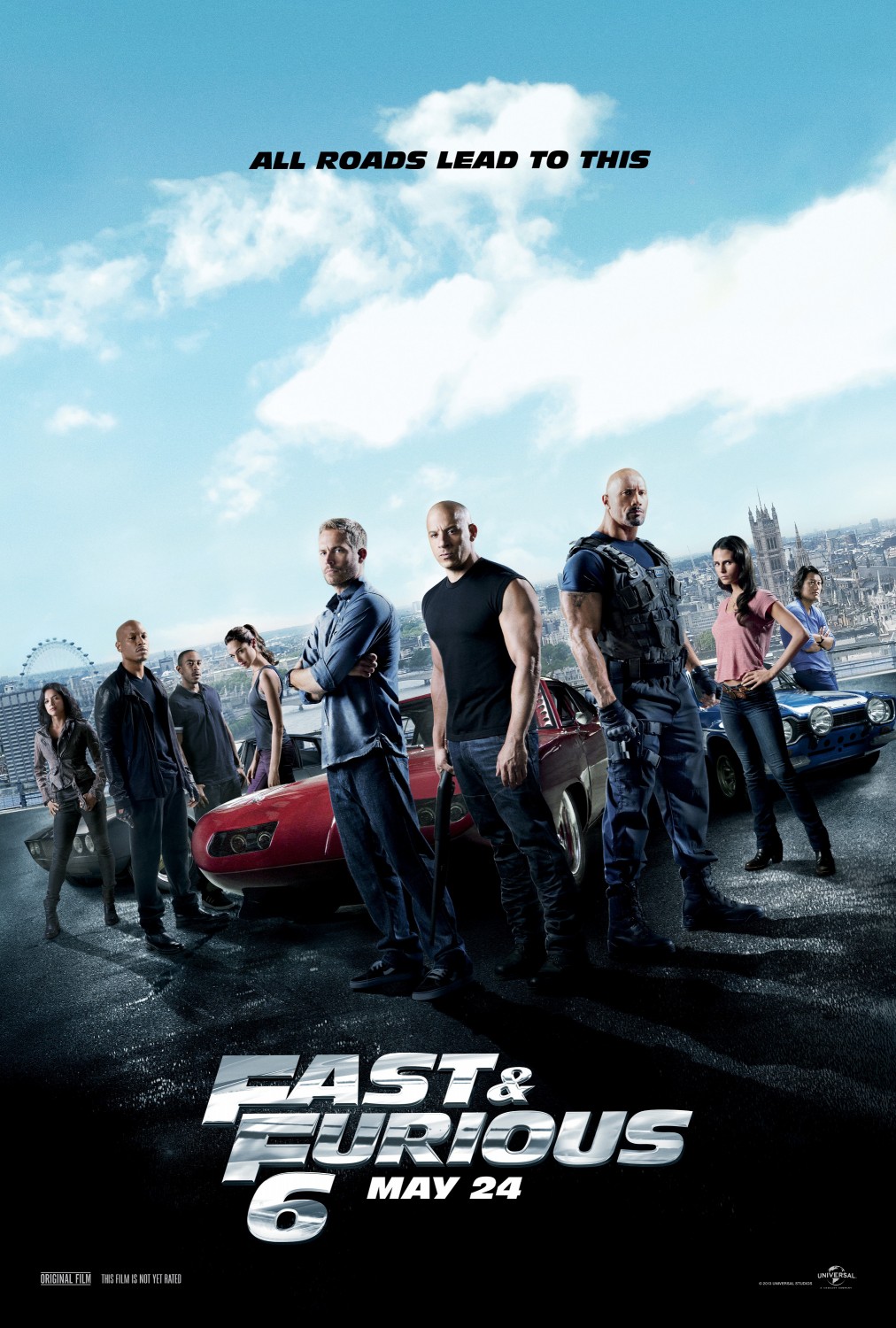
Fast and Furious 6 analysis using Theories

Fast and Furious 6 (2013)


Roland Barthes-

Enigma/Hermeneutic codes: There are many enigma codes during this movie, we tend to find out important and shocking information towards the ending of the film. For example the false hero is revealed, this builds the audience's suspense and thrills throughout the film by questioning the characters.

Action codes: Fast 6 is packed with action codes. Guns are triggered throughout making it obvious to the audience a scene of violence and a fight/battle is approaching. Also, when we hear or see an engine roaring we know a car race will be taking place soon after.

Multi strand narrative: This is the sixth fast and furious, therefore the movie has follow ups and the story continues to develop.

Non-linear pattern:  The film is in non-chronological order.

Tzvetan Todorov-

Equilibrium: Dominic Toretto (hero) thinks peace is finally restored and is enjoying his life with his new girlfriend.

Disequilibrium: Hobbs (dispatcher) informs Toretto that his true love Letty has been found, however he thought she was dead. He learns she is with a new team lead by Shaw (villain).

New Equilibrium: The hero ends up finding and saving Letty and learns she lost her memory. They soon get back together and the evil forces (villains) are defeated so harmony exists once more.

Vladimir Propp - The seven spheres of action

The villain: Shaw, has the princess on his side (team).

The donor: Hobbs, gives the hero evidence in order to find the princess.

The helper: Brian O'Conner, the hero's bestfriend, accompanies him on missions to save the princess.

The princess: Letty, rescued by the hero, loses her memory and forgets everything.

The dispatcher: Hobbs, informs the hero of the mission.

The hero: Dominic Toretto, saves the princess, his love.

The false hero: Riley, pretends to be on the hero's side, however turns out to be helping the villain all along.